
Proactive forklift maintenance: the conversation that saves you the most money
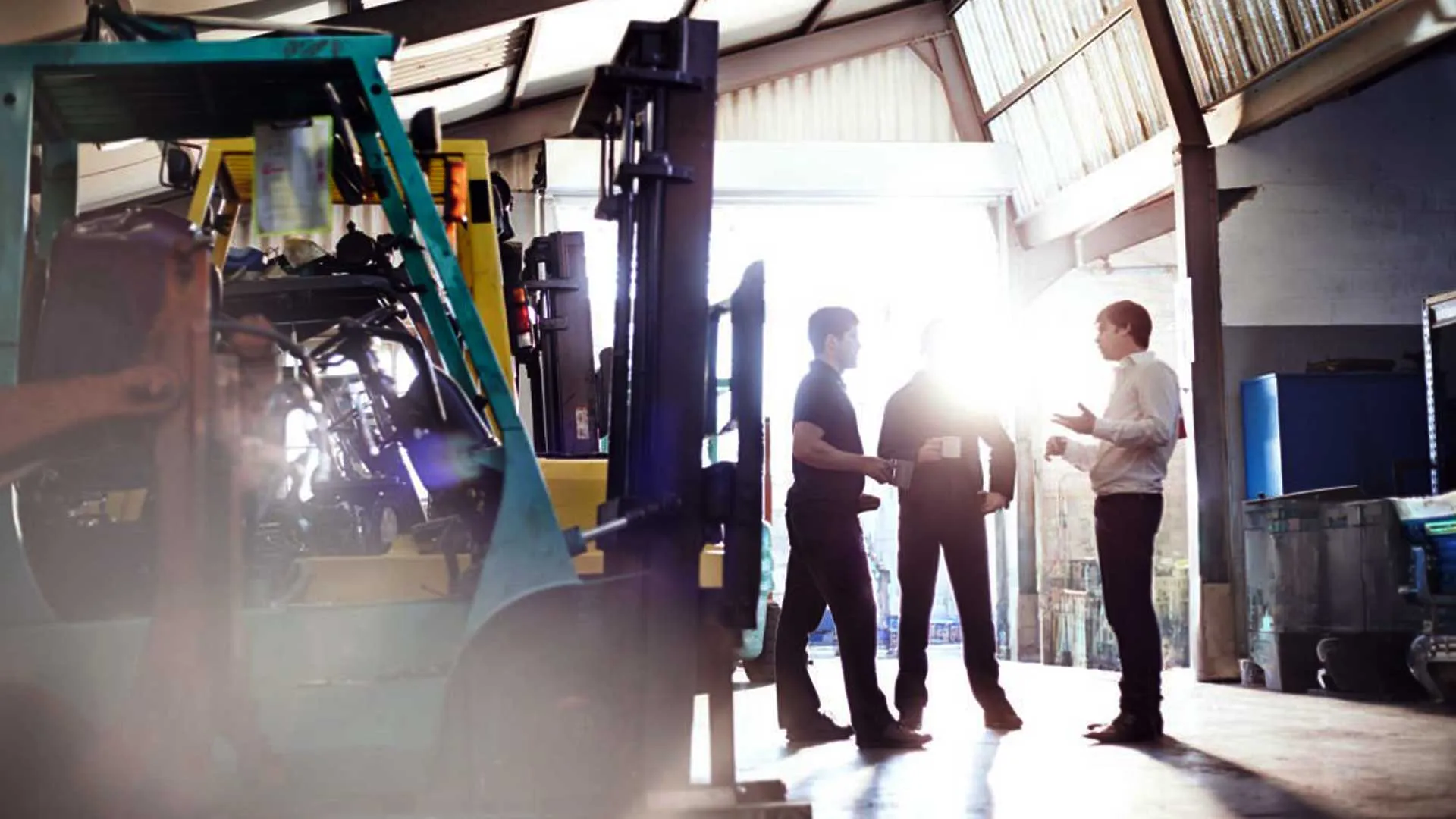
When a technician inspects a forklift truck and encounters a fault that has already happened before, there is almost always a story behind it. And it is usually the same: something happened on site — an impact, an overload or a forced manoeuvre — and no one reported it.
It’s not unusual. It happens in warehouses everywhere.
The issue is not the incident itself. It’s what comes next when that incident remains unnamed: the fault repeats, costs fall outside the maintenance plan, and the relationship between customer and service provider becomes unnecessarily strained.
There is a better way to work. It’s called proactive forklift maintenance.
##What is proactive forklift maintenance?
Proactive maintenance is an approach that, in addition to fixing faults, identifies and eliminates root causes before they occur again. In practice, it relies on sharing real, day-to-day operational information with the service team before problems reach the workshop.
It goes beyond preventive, predictive and corrective maintenance by focusing on human behaviour in equipment operation.
Preventive, corrective, predictive and proactive: what’s the difference?
Preventive maintenance
When it is performed: Based on hours of use or a scheduled calendar.
How it is detected: Through established periodic inspections and checks.
Who performs it: The specialized technical provider.
Corrective Maintenance
When it occurs: Once a technical failure has already occurred.
How it is detected: Through the failure itself or an unexpected machine shutdown.
Who initiates it: The customer via a technical incident report.
Predictive Maintenance
When it is performed: In the pre-failure stage, anticipating the breakdown.
How it is detected: Through the analysis of telemetry and real-time data.
Who initiates it: The customer via a technical incident report.
Proactive Maintenance
When it occurs: Before the problem or breakdown recurs over time.
How it is detected: Through honest communication and root cause analysis.
Who drives it: Close collaboration between the customer and the technician.
In practice, a comprehensive maintenance plan requires all four. But the proactive approach is the only one that cannot work without the customer's active involvement.
What does a full service contract cover… and what does it exclude?
What the plan includes
A full-service contract—whether tied to a lease or offered as a standalone service—covers normal wear and tear of the machine under standard operating conditions: those established by the manufacturer, those outlined in the Occupational Risk Prevention Regulations (Royal Decree 1215/97), and those agreed upon at the start of the contract. This includes periodic inspections, oil changes, replacement of components at the end of their service life, brakes, the hydraulic system, the battery, and any technical malfunction not attributable to normal use.
What is excluded: misuse
Full service does not cover damage resulting from misuse, defined as any situation that exceeds the intended operating conditions:
- Collisions with shelving, loading docks, or columns
- Overloads exceeding the equipment’s rated capacity
- Driving with the forks raised too high while moving
- Forced turns in aisles that are too narrow
- Using the forklift to push or drag unanticipated loads
- Operating on surfaces unsuitable for the contracted model
When the cause of a breakdown is misuse, the repair incurs an additional cost not covered by the plan. And that unexpected expense is exactly what proactive maintenance helps prevent. That’s why communication matters so much. The sooner we identify what’s really happening in the warehouse, the sooner we can address the cause—not just the symptom.
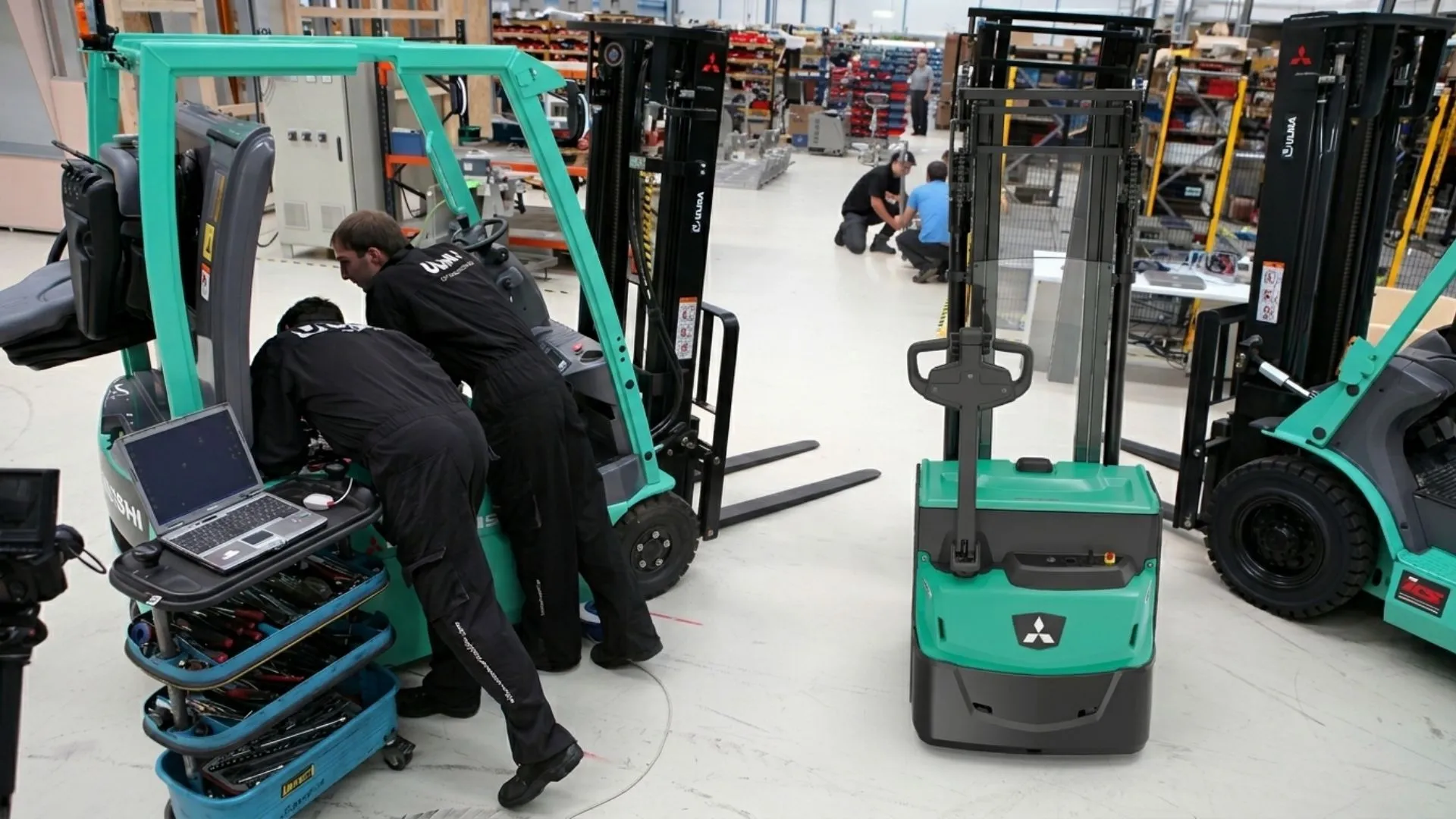
What ULMA does with that information
When a client tells us what happened—even if it seems like a minor incident—we can shift from putting out fires to preventing them. Not to point out mistakes, but to find solutions that work in the actual conditions of their warehouse. Specifically:
Operational environment assessment
We review with you whether there is an aisle that is poorly sized for the forklift model in use, a layout that invites collisions, or areas with reduced visibility. Sometimes the problem isn’t the operator or the machine: it’s that neither is well-suited to the workspace.
Specific training by shift or profile
If incidents are concentrated in a specific shift or among a certain type of operator, we propose targeted training. No generic training: we address the root cause of the problem.
Technical adaptation of equipment
We adjust the equipment to the actual conditions of your facility: activation of lift alarms, speed limiters in critical areas, additional guards, and sensors. The machine can be configured to reduce the likelihood of misuse without compromising productivity.
Pattern detection before the next breakdown
Using the history of actual incidents, we can anticipate which component will fail before it does. This is predictive maintenance powered by proactive information: the two approaches reinforce each other when there is fluid communication between the customer and the technical service team
Three key benefits of proactive forklift maintenance
1. Fewer unexpected costs.
If we identify what is causing the damage and address the root cause, we break the cycle. What doesn’t break doesn’t cost anything. Proactive maintenance turns unforeseen costs into planned decisions.
2. Longer fleet lifespan.
A forklift that operates within its design parameters lasts longer, retains more value at the end of the lease, and results in fewer unscheduled downtime. Durability doesn’t depend solely on the equipment—it depends on how it’s used.
3. Safer operations.
Most instances of misuse pose a greater risk to people than to the machine. Impacts, overloads, and forced maneuvers are precursors to accidents. Talking about them is preventing them.
How we put proactive maintenance into practice
If you already have a full-service contract or a lease with ULMA, your local technician is your first point of contact. There’s no need to wait for the next scheduled service. If you notice anything in the warehouse—a bump, unusual machine behavior, a recurring issue—let us know. That’s the starting point.
If you don’t yet work with us on after-sales service, we can start with an assessment of your current fleet and the actual conditions of use in your facility. No obligation to sign a contract: first we understand your situation, then we discuss solutions.
Shall we talk? Contact your nearest ULMA branch or write to us using the contact form. We pick up the phone when there’s a problem. And also when you just have a question.
Frequently Asked Questions About Proactive Forklift Maintenance
Does proactive maintenance come at an additional cost?
No. It’s a way of working within our standard after-sales service, not a separate product. It’s activated through communication between the customer and the assigned technician.
What is the difference between proactive and preventive maintenance?
Preventive maintenance is performed on the equipment according to a schedule or number of hours. Proactive maintenance addresses the causes of atypical breakdowns—primarily misuse—based on information provided by the customer about how the machine operates in its actual environment.
And what about corrective maintenance?
Corrective maintenance comes into play when a breakdown has already occurred: it repairs the failure but does not address its cause. Proactive maintenance works precisely at that level: it identifies the root cause of the failure to prevent it from recurring, transforming what could be a cycle of corrective actions into continuous operational improvement.
If I acknowledge misuse, does that void my maintenance plan?
No. Acknowledging misuse does not void the contract or penalize your relationship with ULMA. On the contrary: it allows us to address the cause so it doesn’t happen again, which translates to fewer out-of-plan incidents in the future.
What happens if the damage is due to misuse of a leased forklift?
Damage caused by misuse is not covered by the full-service plan and incurs an additional repair cost. This is standard in the industry and is included in lease agreements. The difference with ULMA is that we work with you to understand what caused it and prevent it from happening again.
How do I know if my equipment is in proper working condition?
Your local technician can assess the operating environment: aisles, load types, shifts, and floor surfaces. If there is a mismatch between the machine and the actual conditions in your warehouse, it’s best to identify it before it leads to a breakdown.